Match Feed Size First
Primary jaw opening and impact feed opening sized to blasted or demolished feed — never force oversized rock into a undersized chamber.
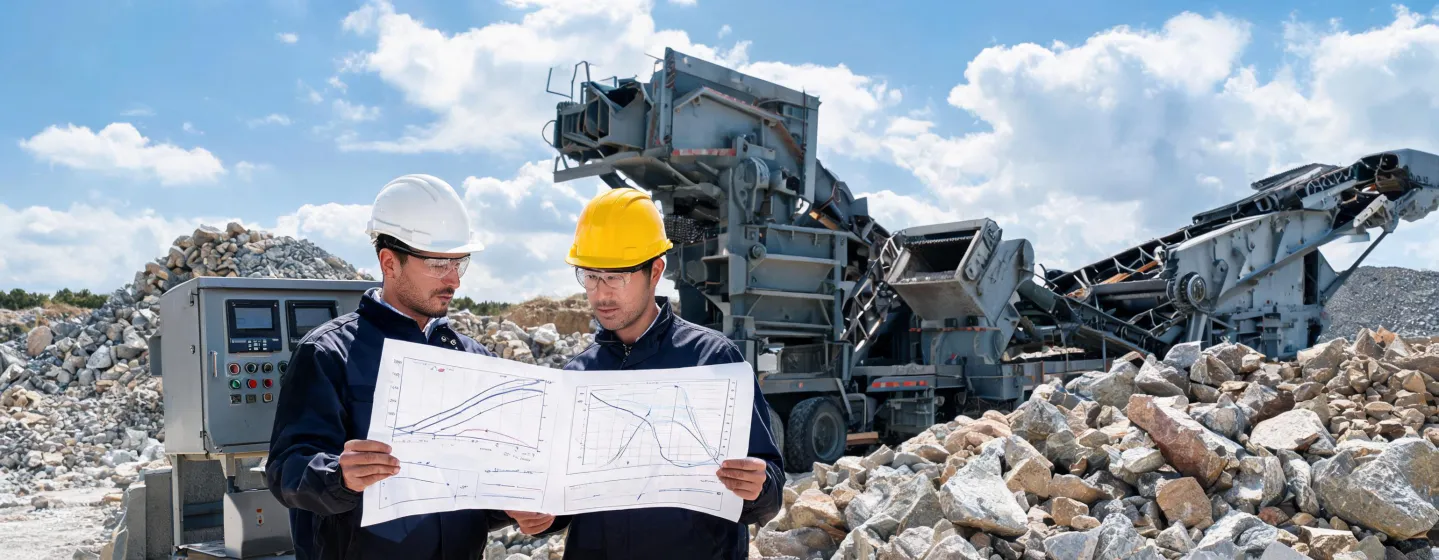
Feed size, discharge opening, vibration frequency and verified t/h — the parameters procurement managers and mechanical engineers put into tender sheets before choosing a Kleemann plant class.
We publish capacity curves we can reproduce on instrumented feed trials — every major liner revision re-validates jaw opening and impact rotor settings against the same rock UCS bands.
Three outcomes engineering desks chase when comparing Kleemann jaw crushers, impact crushers and vibrating screens.
Primary jaw opening and impact feed opening sized to blasted or demolished feed — never force oversized rock into a undersized chamber.
Discharge opening and CSS-oriented secondary settings mapped to asphalt, concrete or road-base fractions before the first production shift.
Dry limestone curves adjusted for wet recycled feed so vibration frequency and mesh choice protect screening efficiency.
Progress against the documentation pack chief engineers expect before factory acceptance — not ESG pledges.
Industry dispute coverage for buyers still deciding primary reduction technology. Both sides are valid; Kleemann engineers size either path against rock UCS, tramp-metal risk and product shape targets.
Simple chamber geometry, broad hardness tolerance (Mohs ≤ 9 class feeds), predictable discharge opening control and generally lower liner complexity for abrasive granite and basalt campaigns.
Higher cubical product rates for asphalt fractions when feed is prepared and tramp metal is controlled — preferred when finished aggregate shape drives pavement performance.
| Parameter | Jaw Primary | Impact Primary |
|---|---|---|
| Typical feed size | up to 900–1,200 mm class | up to 500–700 mm class |
| Product shape | Acceptable; often needs secondary | High cubicity potential |
| Tramp metal risk | More forgiving | Requires magnet / detector discipline |
| Output capacity | 180–450 t/h class bands | 220–450 t/h class bands |
Share rock type, moisture and target gradations — receive a jaw / impact / screen recommendation with capacity curve references.
Request a Capability Audit